(0)
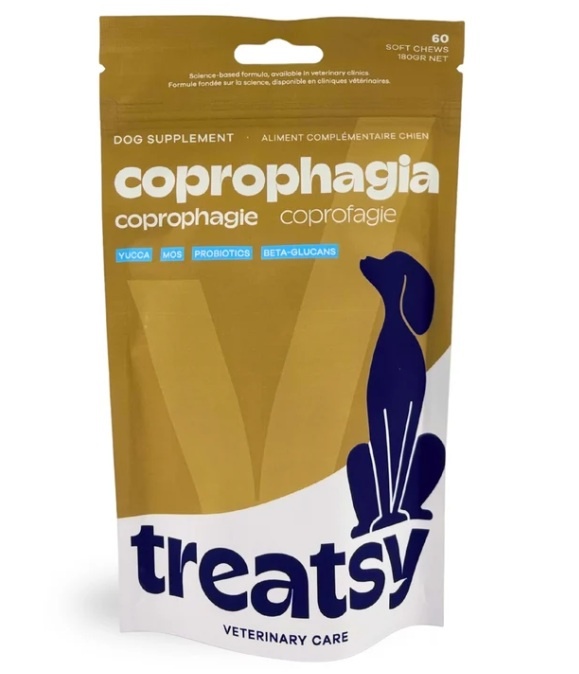
Treatsy Coprophagia Soft Chews | Dog Eating Poop? With Yucca & Probiotics
Articlecode: 79513
- Free shipping from €75 within the Netherlands (max 14kg)
- Fair prices
- Fast delivery
Out of stockView our alternatives
Product information
Description
Treatsy Coprophagia: when your dog eats poop
A dog that eats poop: gross, frustrating and yet completely normal. It's very common in puppies, but adult dogs can develop the habit too. Usually several things play a part at once: habit, boredom, and the smell and taste of the stool itself.
Treatsy Coprophagia is a complementary feed in the form of tasty Soft Chews that focuses on that last point. The combination of yucca, yeast (MOS and beta-glucans) and the probiotic strain Enterococcus faecium NCIMB 10415, on a base of hydrolysed pork protein, helps make stools less interesting to your dog. It is part of Treatsy Veterinary Care, the line that is also recommended by vets.
Why Treatsy Coprophagia?
- Four ingredients, one goal: stools that smell and taste less appealing
- Yucca schidigera: contributes to a less pungent stool odour
- Yeast (MOS and beta-glucans): supports a balanced gut flora
- Enterococcus faecium NCIMB 10415: one of the most studied probiotic strains in dogs
- Hydrolysed pork protein: an easily digestible base
- Clear course: 8 weeks, with a check-in after 4 weeks
How do the ingredients work?
Hydrolysed pork protein
This protein is already broken down into small peptides. As a result, fewer undigested protein residues end up in the stool, and it's exactly those residues that make stools interesting to a dog.
Yucca schidigera
The sharp smell of dog stools comes largely from ammonia. Yucca contains saponins that bind ammonia, so stools smell less strong and also smell different.
Yeast: MOS and beta-glucans
These yeast cell wall components support a balanced gut flora and "cleaner" fermentation in the large intestine. That means fewer odorous breakdown products.
Enterococcus faecium NCIMB 10415
This probiotic strain helps keep the gut flora in balance. Less undigested protein is then broken down in the large intestine, producing less ammonia and fewer sulphur compounds.
Feeding guide
| Weight | Soft Chews per day | Yucca | Yeast (MOS, β-glucans) | E. faecium | Pouch (60 pcs) lasts |
|---|---|---|---|---|---|
| < 10 kg | 1 | 50 mg | 500 mg | 5 x 10⁸ CFU | 60 days |
| 10–20 kg | 2 | 100 mg | 1000 mg | 1 x 10⁹ CFU | 30 days |
| 20–30 kg | 3 | 150 mg | 1500 mg | 1.5 x 10⁹ CFU | 20 days |
| > 30 kg | 4 | 200 mg | 2000 mg | 2 x 10⁹ CFU | 15 days |
Course and what to expect
Give Treatsy Coprophagia daily for 8 weeks. The smell of the stools often changes in the first weeks. The behaviour itself usually takes longer, because it is also a habit that needs to be broken.
Check in after 4 weeks. If you see improvement, complete the course to 8 weeks. If you see no change, ask your vet to rule out other causes.
Maintenance isn't always needed after the course. If your dog slips back into the old habit, give it daily again for 2 to 4 weeks. For dogs that relapse easily, a maintenance dose of 1–2 Soft Chews every 3 days is also an option.
Tips to support the course
- Pick up stools straight away, in the garden and on walks
- Keep your dog on the lead in places where he often finds stools
- Practise a "leave it" or "come" cue and reward generously
- Provide enough exercise, mental stimulation and chews to prevent boredom
Analytical constituents
Crude protein 14%, crude fat 10%, crude ash 6.5%, crude fibre 2%
Practical info and storage
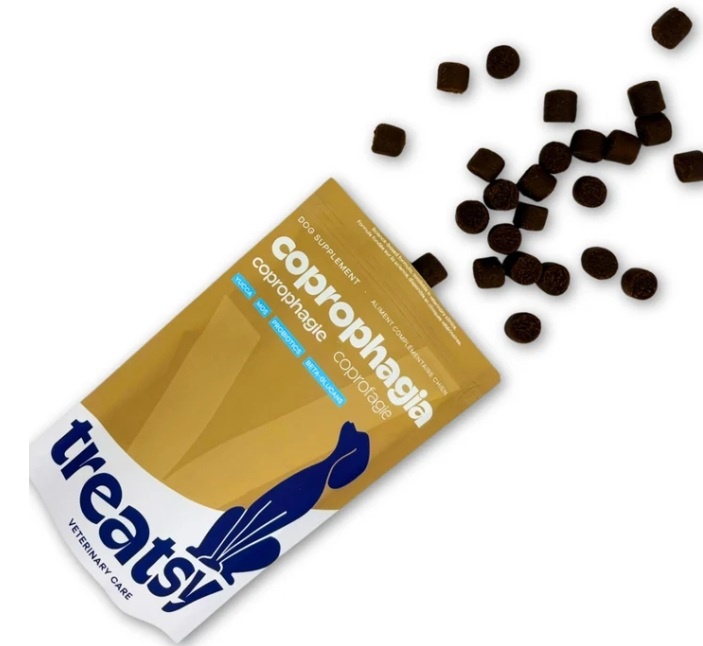
60 Soft Chews of 3 grams. Store in a cool, dry place away from direct sunlight.
Frequently asked questions
Why does my dog eat poop?
To dogs, stools aren't waste but a source of information, and sometimes of "leftover food". Habit, boredom, a strong food drive and the smell and taste of the stool all play a role. In puppies, it's often part of exploring the world.
How soon will I notice a difference?
The smell of the stools often changes within the first weeks. Because eating stools is also a habit, the behaviour usually needs more time. That's why it's best to complete the full 8-week course.
My dog eats the poop of other dogs or cats. Will this help?
Treatsy Coprophagia works on the stools of the dog that eats the Soft Chews. If your dog mainly eats the stools of other animals, training and picking up straight away matter most. Have more than one dog? Then give it to all the dogs in your household.
Is it suitable for puppies?
Coprophagia is very common in puppies. Check the packaging for the minimum age, or ask your vet.
What if I see no change after 4 weeks?
Then ask your vet to take a look. There may be another cause behind the behaviour that needs attention first.
Can I combine it with regular food?
Yes. Treatsy Coprophagia is a complementary feed and is given alongside your dog's normal food, for example as a reward.
Article number: 79513
SKU: 79513
Reviews
1 star
0 reviews
2 stars
0 reviews
3 stars
0 reviews
4 stars
0 reviews
5 stars
0 reviews
No reviews found



© Copyright 2026 - Zoolac | Realisatie InStijl Media